Review the cooking line
Share the appliance lineup, hood layout, and existing suppression records so we can discuss the right service scope.
Kitchen Hood Suppression
Cooking oils, hot appliances, and grease-laden exhaust create a distinct fire risk. Talk with CEN-SOR about fixed suppression for your commercial kitchen, hood, and duct system.
Let’s Plan Your Fire Protection ↗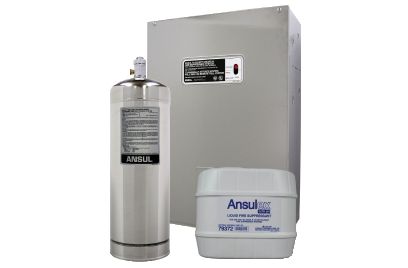
A closer look at the equipment
The R-102 uses ANSULEX wet chemical to cool hot cooking surfaces and form a protective blanket that helps reduce re-ignition. Discharge nozzles cover designated cooking and ventilation hazards.
Manufacturer product example. Final equipment and availability are confirmed for your project.
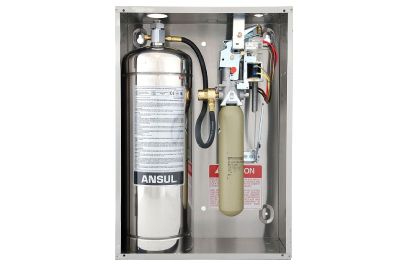
An enclosure houses the agent supply and release hardware; piping carries the suppressant to the protected areas.
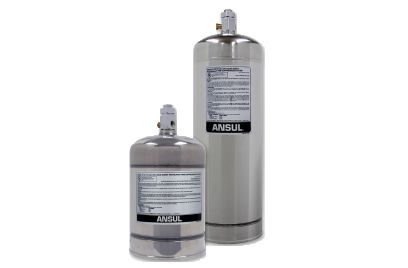
Tank sizing and nozzle coverage depend on the appliances, hood, and approved system design.
Product photography: ANSUL / Johnson Controls. Explore manufacturer product details ↗
How it works
Share the appliance lineup, hood layout, and existing suppression records so we can discuss the right service scope.
Review coverage, detection, manual activation, and any required equipment shutdown connections with a qualified system professional.
Arrange inspection and maintenance, keep service records, and request a coverage review whenever cooking equipment moves or changes.
What it does for you
Wet-chemical systems address the grease and cooking-oil hazards found in commercial kitchens.
Appliance-specific or overlapping nozzle arrangements can protect cooking surfaces alongside hood and duct hazards.
Discuss new installation needs, existing equipment condition, and follow-up work with the team.
Let’s talk through the details
Restaurants, cafeterias, school kitchens, hospitality kitchens, and other commercial cooking spaces. The cooking equipment and exhaust arrangement determine the system needs.
Yes. Changes to appliance position, type, or hood configuration can affect coverage. Have the suppression design reviewed before operating the changed cooking line.
No. Grease removal and suppression maintenance address different needs. Keep both on your kitchen maintenance schedule.
Protect today. Prepare for tomorrow.
Tell us about your property, existing equipment, and service needs. We’ll help you explore the right scope and scheduling.
System selection, design, installation, and service depend on site conditions, manufacturer requirements, and the authority having jurisdiction. Product examples do not confirm a specific model for your property.